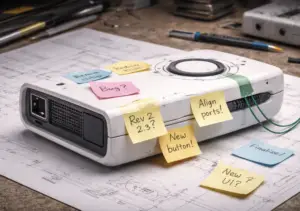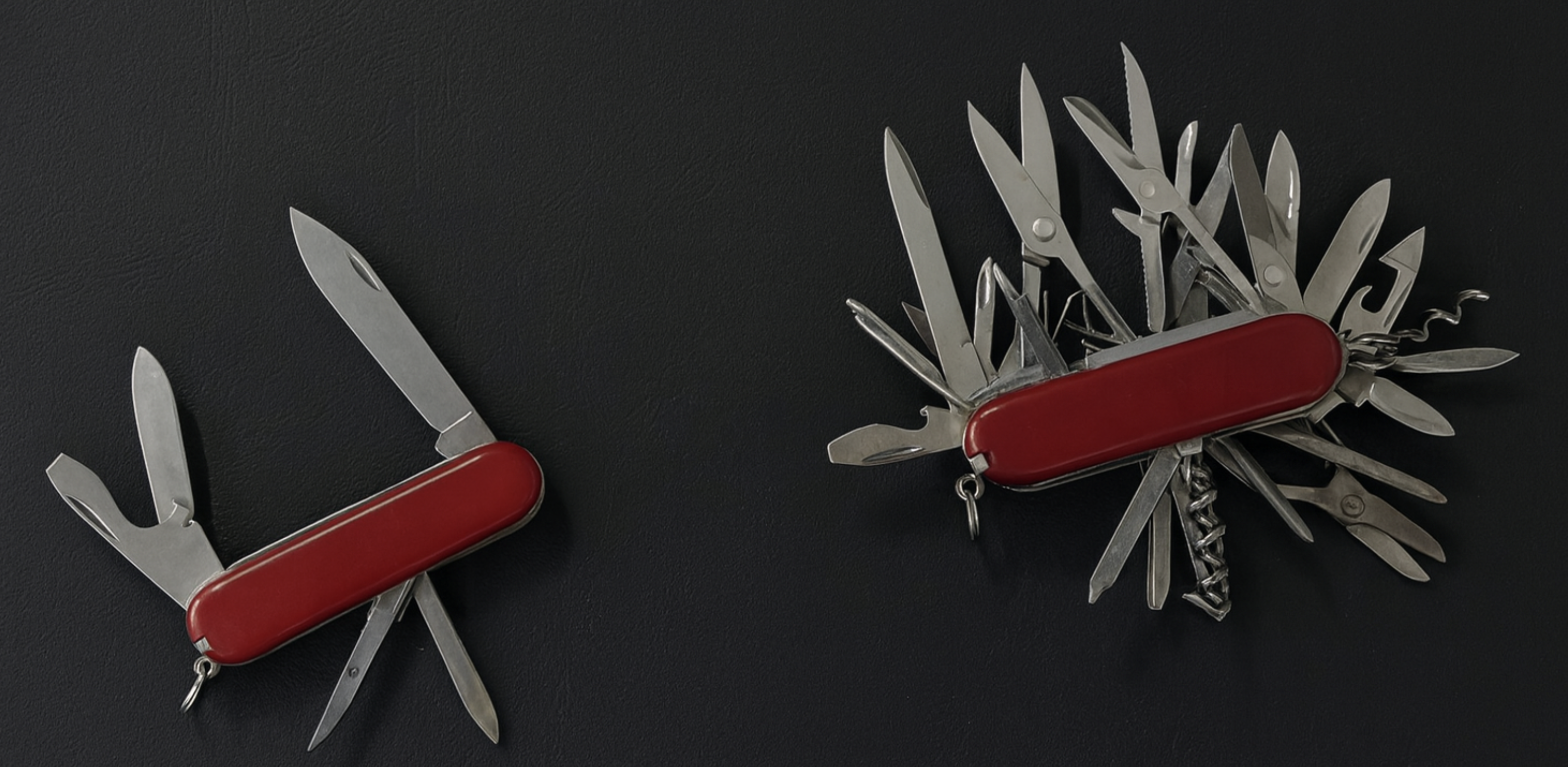
Iteration isn’t the problem, and it never has been. Every solid product evolves organically over time. The real problem begins when teams send a V1 to market knowing damn well that there are fundamental issues at play that haven’t been addressed, and justify that decision by saying, “We’ll just deal with it in V2.”
I’ve seen that mindset lead to much higher tooling costs, longer assembly times, supplier rework, and design compromises that get locked in once production starts, turning what felt like a short delay into permanent, skyrocketing costs down the line (pun intended).
Where This Mistake Usually Starts
These decisions don’t look reckless on the surface when they’re first made. They usually show up as designs that “technically” work, pass a prototype build, or survive early testing, but feel fundamentally wrong if you’re someone who has real experience in manufacturing and Design for Manufacturing (DFM) constraints. It’s typically things like:
- Assemblies that technically go together, but fight you the whole way along
- Enclosures that fit, but force compromises across the rest of the product
- Manufacturing steps that are either fragile, overly manual, or just a plain pain in the ass
- Tolerances that barely pass once and never really get pushed to their actual limit
None of these listed above feels totally catastrophic on its own. That’s the trap everyone gets stuck in. Once they all stack up against you, they stop being temporary and become permanent
The Illusion of “We Can Fix It Later”
Early in product development, everything feels pretty fluid. CAD changes are relatively quick, Bills of Materials (BOMs) are still mostly theoretical, and manufacturing hasn’t even pushed back yet on anything.
That creates the illusion that nothing is truly locked in and that any compromise can be revisited later on without much of a plan or pain. That illusion dies the minute tooling, suppliers, certifications, and real production constraints come into play.
What felt like a few small shortcuts starts showing up as exponentially higher unit costs, baked-in assembly time, stacked workarounds, and reliability issues that don’t fail loudly at first but surface slowly, then all of a sudden at once. At that point, you are truly fucked, teams aren’t deciding whether to fix the problem, they’re deciding whether they can even afford to undo it.
Iteration vs. Avoidance
This is where iteration commonly gets confused with avoidance. Real iteration happens once the core fundamentals are rock solid. It looks more like refining usability after many users actually interact with the product and fine-tuning features once the core product has proven itself.
What iteration is absolutely not is knowingly sending a product to market, knowing very well that there are core foundational issues, and calling that a roadmap to V2.
If V2 is carrying things like:
- Core system or product architecture decisions
- Manufacturability and DFM logic
- Assembly flow or serviceability problems
- Tolerance stack-ups and system-level interactions
That’s not iteration. That’s just unfinished work with a much nicer-sounding label.
The Hard-Earned Lesson
Don’t get me wrong, you don’t need to perfect everything in V1. That’s totally unrealistic, but some core decisions and challenges need to be met head-on and finished correctly, not postponed, especially the structural and manufacturing choices that everything else critically depends on.
Teams that have brought more than one physical product eventually learn this the hard way. They get better at knowing what can safely wait and what absolutely can’t. They push right on through uncomfortable conversations earlier and slow the fuck down where it matters most, not because they’re perfectionists, but because they’ve paid that bill before. If the fundamentals aren’t right, V2 won’t feel like progress. It’ll feel much more like damage control.
Things That Don’t Belong in V2
These are the issues that seem manageable early on but tend to lock themselves into the product once production starts:
- Anything foundational to the system architecture
- Decisions directly tied to manufacturability or DFM, not just aesthetics
- Issues baked into assembly flow, serviceability, or production sequencing
- Tolerance or interaction problems that only barely worked in the prototype
- Anything you already know will be a pain in the ass to fix later
If you’re in the middle of a V1 and already hearing “we’ll fix it in V2,” that’s usually the exact moment you need to pause. A short, honest review of the design, manufacturability, and system architecture by people who’ve been through production can save months of rework and a lot of money later. If you want a second set of eyes before those decisions harden, that conversation is worth having now. Reach out anytime or visit this link for more information or to book a no-charge consultation.