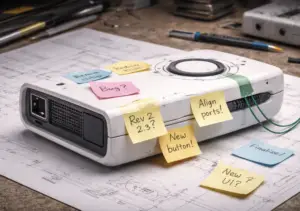
Bringing a new product to market is really exciting, but it’s also where many companies burn through a lot of time, money, and opportunity because they jump right into product development well before they’re ready.
All too often, organizations approach a product development team expecting them to solve every single challenge magically. While most experienced product designers and engineers can definitely help to shape a concept, they can’t fully compensate for unclear objectives, unrealistic expectations, or a very poorly defined business case.
Before investing in any product design, engineering, prototyping, or manufacturing support, ask yourself these five critical questions.
1. Are you Solving a Real Problem or Chasing an Idea?
Many product concepts sound promising in a boardroom, but far fewer survive real-world exposure with the market.
The first question isn’t whether your idea is innovative or not; it’s really about whether it solves an important problem for a clearly defined audience.
Customers very rarely buy products simply because they find them interesting. Most customers in the real world buy products because they address a specific need, help to eliminate a frustration, save time, reduce costs, improve safety, or simply create a better experience.
If you can’t clearly explain the problem your product solves and the audience that experiences that problem, you’re likely not ready to dive into development.
2. Do You Actually Know Your Customer?
“We sell to everyone” is one of the fastest ways to create a product that appeals to no one.
Successful product development starts with a deep understanding of the intended user. What are their specific challenges? How do they currently try to solve (or even workaround) the problem? What do they like about existing solutions? What do they dislike?
The more specific your understanding of the end user, the more effective the product development process becomes. Design decisions, feature priorities, usability requirements, and manufacturing considerations all become much easier when the customer is clearly defined.
3. What Does Success Actually Look Like?
Many projects start with really ambitious goals and very vague expectations.
Do you want to reduce manufacturing costs? Improve reliability? Enter a new market? Increase production efficiency? Replace an outdated product? Create a new revenue stream?
Without clearly defined project objectives, product development teams are forced to make general assumptions, and assumptions often lead to expensive revisions later.
The most successful projects begin with accurate milestones and clear, measurable goals that everyone understands from day one.
4. Are You Prepared for What Product Development Really Costs?
This is often the question that almost all companies try to avoid.
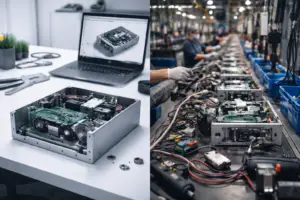
Developing a successful product involves a lot more than creating drawings or building a prototype. Design iterations, engineering reviews, testing, regulatory requirements, manufacturing considerations, tooling, and production planning all require time and resources.
The cheapest path is very rarely the least expensive in the long run. Cutting corners during development often creates much larger problems during manufacturing, product launch, or customer adoption.
A realistic budget and timeline create the foundation for a successful project and help avoid nasty surprises later in the process. This is really a “you get what you pay for” type of scenario.
5. Are You Looking for a Vendor or a Strategic Partner?
This is often the question that almost all companies try to avoid.
Developing a successful product involves a lot more than creating drawings or building a prototype. Design iterations, engineering reviews, testing, regulatory requirements, manufacturing considerations, tooling, and production planning all require time and resources.
The cheapest path is very rarely the least expensive in the long run. Cutting corners during development often creates much larger problems during manufacturing, product launch, or customer adoption.
A realistic budget and timeline create the foundation for a successful project and help avoid nasty surprises later in the process. This is really a “you get what you pay for” type of scenario.
Some Final Thoughts
Product development is one of the most important investments any company can make. It can create competitive advantages, open new markets, and generate significant long-term growth. But it can also become a costly exercise if the right questions aren’t asked right at the beginning of a project.
Before engaging with any product development team, take the time to think realistically about your objectives, understand your customers, and define what success really looks like. The answers you get will not only improve the development process, but they’ll also dramatically increase your chances of bringing a successful product to market.
Ready to Move Your Product Forward?
Whether you’re refining an existing product, developing a new concept, or evaluating the feasibility of an idea, the team at SHEPPiD can help you navigate the entire process with total confidence. Contact us today to discuss your project and discover how strategic product development can help turn your vision into a market-ready solution.